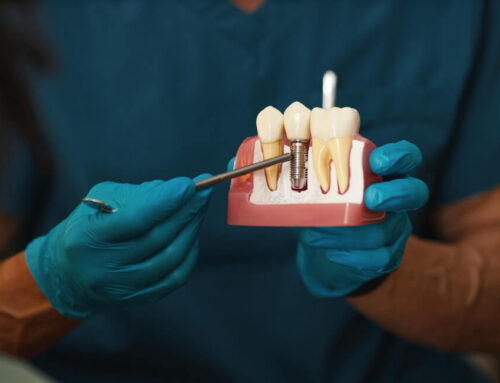

Peri-implantitis and Poor Oral Hygiene in Prosthetic Work — Causes, Consequences and Effective Prevention
Implants, crowns and bridges can last for many years — but only when properly cared for. Unfortunately, many patients still believe that “you don’t floss crowns” or that implants “maintain themselves,” which are among the most harmful myths in dentistry. Poor oral hygiene can lead to peri-implantitis, a serious inflammatory disease affecting the tissue around dental implants, often resulting in bone loss and even implant failure.
Below is a clear explanation of what peri-implantitis is, why hygiene around prosthetic restorations is essential, and how to properly care for your mouth to protect both your natural teeth and your prosthetic work.
What Is Peri-implantitis?
Peri-implantitis is an inflammatory disease of the soft tissue and bone surrounding a dental implant. It develops as a result of bacterial accumulation in dental plaque, leading to:
- redness and swelling of the gums,
- bleeding on brushing,
- unpleasant mouth odor,
- bone loss around the implant,
- loosening and potential loss of the implant.
The condition most commonly affects patients who do not floss, do not use an oral irrigator, or struggle to properly clean the areas around their prosthetic restorations.
Why Is Poor Hygiene Especially Dangerous for Crowns, Bridges and Implants?
Prosthetic restorations include many areas where a toothbrush simply cannot reach, such as:
- spaces between crowns,
- the underside of bridge pontics,
- the connection between the implant and the crown,
- gingival margins and peri-implant sulcus.
If plaque and food debris remain in these regions, inflammation develops. On natural teeth it leads to gum disease and decay; around implants it results in peri-implantitis.
MYTH: “You don’t floss crowns.”
FACT: Crowns, bridges and implants must be flossed.
Whether a crown sits on a natural tooth or an implant, plaque builds up the same way. If not removed, it leads to:
- gingival inflammation,
- bad breath,
- peri-implant diseases,
- demineralization or decay under crowns on natural teeth.
Special floss (superfloss) is essential for cleaning under the pontic of a bridge and between multiple connected crowns — areas inaccessible to a toothbrush.
What Are the Benefits of an Oral Irrigator?
An oral irrigator is one of the most effective hygiene tools for prosthetic patients. It works by using a pressurized stream of water to flush out bacteria and food debris from hard-to-reach areas.
Key benefits include:
- reduction of plaque in interdental and subgingival areas,
- lower risk of peri-implantitis,
- decreased gum bleeding and inflammation,
- excellent effectiveness around bridges, implants and orthodontic appliances.
Note: An irrigator does not completely replace flossing, but it is an essential complement to it.
Which Mouth Rinses Are Recommended?
Mouth rinses help reduce bacteria, support the gums, and enhance daily hygiene. Commonly recommended options include:
- Cetylpyridinium chloride (CPC) – antibacterial, helpful for gingival inflammation,
- Chlorhexidine (CHX) – for short-term use during active inflammation,
- Fluoride rinses – protect natural teeth, especially under crowns,
- Herbal rinses (sage, chamomile) – soothe irritated gums.
A rinse cannot replace mechanical cleaning, but it is an effective supportive measure.
How to Properly Take Care of Oral Hygiene with Crowns, Bridges and Implants
Your daily routine should include:
- Brushing at least twice a day with a manual or sonic toothbrush.
- Flossing — regular floss for single crowns, superfloss for bridges.
- Using an oral irrigator — ideally every evening.
- Mouth rinse to support gum health and reduce bacterial load.
- Professional hygiene every 6 months, especially for implant patients.
- Regular dental check-ups — at least once or twice a year.
Consequences of Neglect — What Can Poor Hygiene Lead To?
- peri-implantitis and implant loss,
- gingivitis and periodontitis,
- tooth decay under crowns,
- bad breath,
- the need to replace prosthetic work,
- treatment costs far exceeding preventive care.
Both dental implants and prosthetic restorations require meticulous daily care. The myth that “crowns don’t need flossing” is not only false — it is dangerous. Flossing, an oral irrigator and an appropriate mouth rinse are essential for maintaining healthy tissues, prolonging the lifespan of prosthetic work and minimizing the risk of peri-implant disease.