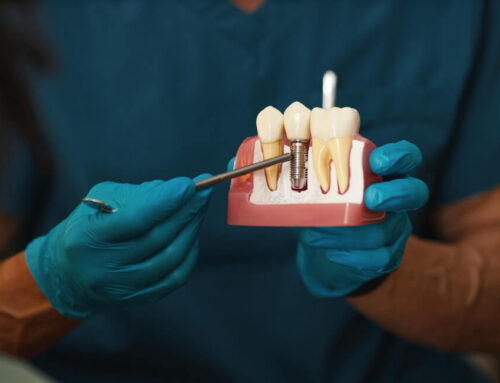


- What is an implant template?
Surgical guide implant template is an implantology tool, a type of cap that allows precise insertion of an implant into a pre-planned location.
2. How is an implant template made?
An implant template allows for an individual reflection of the prosthetic field, assisting in proper surgical placement and angulations of dental implants.
A specialised program is used to design the template, which requires input of the patient’s CT scan, the implant system used, the type of surgical template, intraoral scans or impressions and additional elements, e.g. a sleeve for the template or a sleeve for stabilising pins. Based on the data obtained and an assessment of the bone density and quality, the implantologist, together with the technician, selects the ideal site for the implant. The dental technician then designs a suitable individual dental template in the laboratory so that the implantologist can drill with extreme precision and maximum safety. This ensures a minimally invasive procedure.
3. Advantages of using an implant template
Implantation navigated with an implant template allows to:
- Achieve a predictable and optimal implant insertion angle,
- Increase patient comfort,
- Carry out the implant procedure strictly according to a predetermined plan,
- Perform less invasive, flapless surgery, and therefore decrease chances of swelling,
- Reduce surgical exposure time and thus the healing time,
- No bone atrophy as a result of gum detachment during surgery
- Possibility of immediate computer planning and execution of the temporary crown before surgery
4. Types of implant templates:
Implant templates are mainly static templates made of resin, which is characterised by Class I biocompatibility, meaning that it is designed for safe contact with tissue and skin. The templates can be designed with pins that stabilise on the alveolar ridge or based on the palate or adjacent teeth.
We distinguish between the following types of implant templates:
- templates designed for pilot drills – only navigate the first stage of implantation, i.e. the first (pilot) drill,
- templates with holes for insertion of drills and implant through the template,
- templates for complete osteotomy,
- templates for edentulous bone reduction when the vestibular dimension is small,
- templates for “Work on 4 implants” or “Work on 6 implants” implantation.
5. When is implant template work recommended?
Implantation navigated with an implant template is recommended for:
- difficult conditions for implantation,
- low bone density
- short distance to a nerve or sinus,
- planning removal of an old implant,
- planning apex resection,
- extensive implantation or implantation in highly aesthetic areas,
- planning sinus lift,
- extraction with immediate implantation,
- patient requirements (when the patient wishes to reduce the treatment time and increase the predictability of the work).
6. What are the advantages of implantation using an implant template?
- maximum precision of the procedure – the implant is placed precisely in the planned location,
- less invasive procedure – often without the need for a large incision in the gum,
- faster healing – less tissue trauma means shorter recovery time,
- shorter procedure time – implant placement is more efficient and predictable,
- greater patient comfort – less pain and swelling after the procedure,
- better aesthetic effect – the implant is perfectly positioned for the future crown,
- predictable treatment outcome – the patient knows what the final result will be.